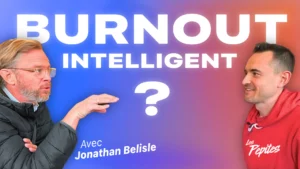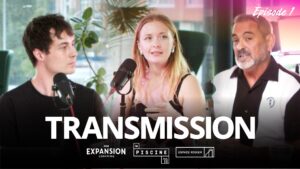
Blind Spot — Episode 02
The only skill
AI still values
Three Quebec entrepreneurs explore how to build AI agents, protect digital sovereignty, and pinpoint what machines will never be able to do for you.
Building your own AI agents without being a coder
Jonathan explores Claude Code and builds his own AI agents without being a developer. What was once reserved for devs is now open to everyone — and it changes everything.
Digital talent vs organic talent: finding what AI can't do
Julien introduces the concept: your digital talent can be reproduced by machines. Your organic talent, on the other hand, is irreplaceable. The key is to identify and manage both.
Vibe coding and visual fidelity: the real limitations of AI tools
Lovable, Base44, Replit, Cursor: Jonathan and Vincent break down why these tools generate generic outputs. Pixel-perfect fidelity remains out of reach without precise annotation work.
Digital sovereignty in Quebec: Local AI vs cloud models
Don't give everything to the same model. Split your data between OpenAI, Claude and Gemini. Vincent develops a local AI agent at Crewdle to protect sensitive data.
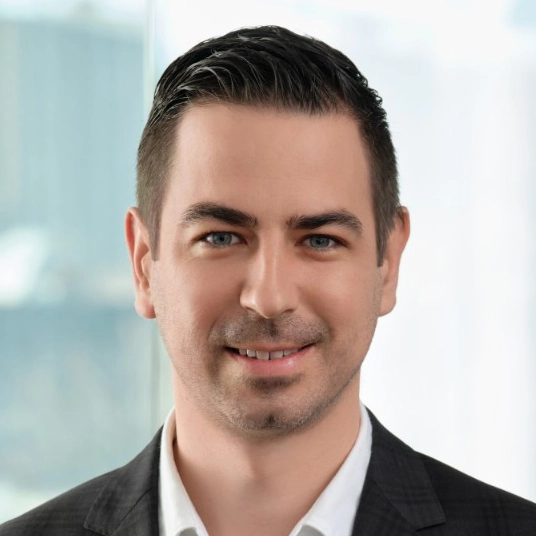

Crewdle
Vincent Lamanna
AI Infrastructure & organizational transformation
Vincent builds the infrastructure that enables companies to deploy AI reliably, securely, and at a fixed price.
Paracosm
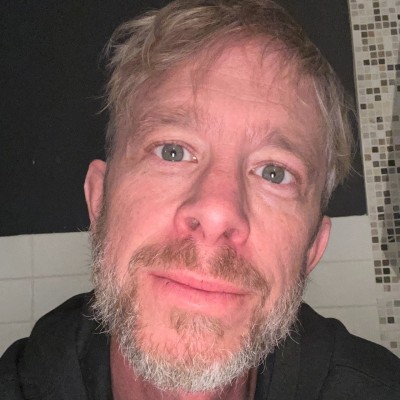
Jonathan Bélisle
AI governance, design & transformational residencies
30 years of design, three years reinventing everything because of AI. Jonathan teaches businesses to declare intentions before touching any tool.

monExpansion
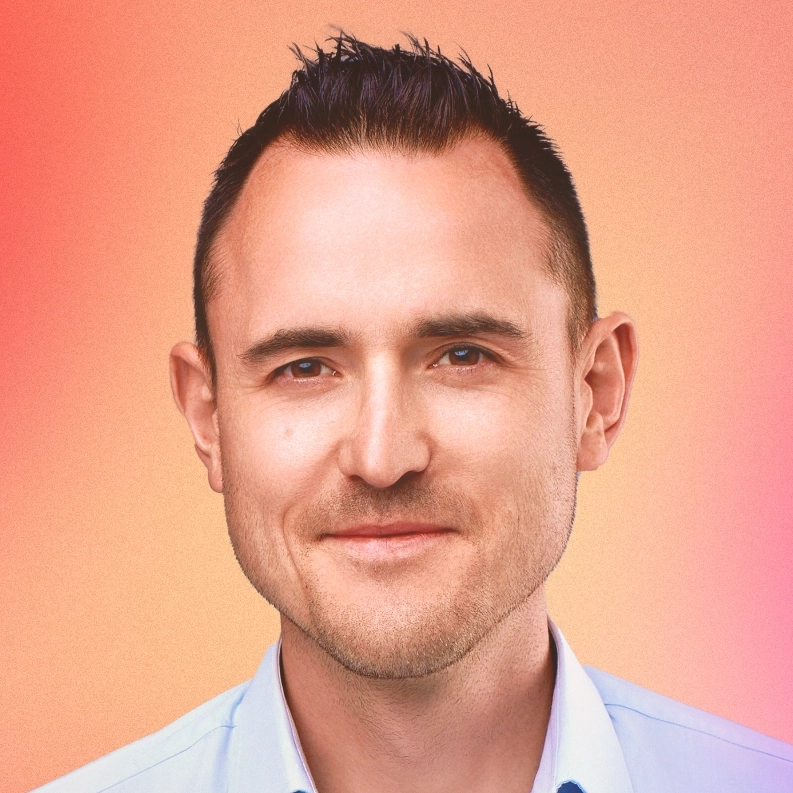
Julien Klein
The human factor, the Talent Trap & personal sovereignty
15 years in VFX (RodeoFX, Scanline/Netflix), now coaching creative entrepreneurs. His question: does your talent protect you, or trap you?
What we're talking about
In this second episode of Blind Spot, Jonathan, Vincent and Julien dive into the issues that define AI in 2026: how to build your own agents with Claude Code, why vibe coding has real limitations, and how to protect your digital sovereignty without sacrificing performance.
Vincent Lamanna (Crewdle) turned his team into a network of autonomous agents with each employee running their own AI tools. Jonathan Bélisle has spent 30 years exploring design and transformation through AI and warns against the illusion of full automation. Julien Klein, after 15 years in VFX with Scanline/Netflix, develops the concept of organic talent: what makes us irreplaceable in front of machines.
Vincent Lamanna built an AI infrastructure at Crewdle that transforms businesses and is also developing a 100% local AI agent to protect sensitive data. Jonathan Bélisle spent 30 years in design and helps companies not confuse speed with depth when it comes to AI. Julien Klein managed 150 people in VFX at Scanline/Netflix before focusing on creative coaching and now offers the concept of organic talent as a shield against automation.
Together, they explore why processes remain essential even in the era of AI agents, how to distinguish your digital talent (what machines will replace) from your organic talent (what they’ll never do), and why choosing only one AI model is a major strategic error. The conversation flows from tech to philosophy, from everyday operations to the geopolitics of language models.
Three complementary perspectives, one certainty: your organic talent is what AI will never be able to do for you.
The Talent Trap: When your expertise becomes your prison in the age of AI
Artificial intelligence doesn’t replace talent. It amplifies it. And that’s exactly where the trap lies.
For years, the recipe for professional success was simple: become an expert in a field, accumulate experience, and your value will grow over time. This model worked for decades. It is now collapsing.
In the second episode of Blind Spot, Vincent Lamanna (CEO of Crewdle), Jonathan Bélisle (Paracosm), and Julien Klein (monExpansion) tackle a disturbing question: does your talent protect you, or does it trap you?
Organic talent vs digital talent: the new divide
Organic talent is what you’ve built with time, sweat, and experience. 10,000 hours of practice. Thousands of delivered projects. An expertise you carry in your body and intuition.
Digital talent is what AI can replicate in seconds. Generating code, writing content, analyzing data, producing visuals.
The question is no longer if AI can do your job. It’s about understanding what part of your work is organic (irreplaceable) and what part is digital (soon to be automated).
For most senior professionals, the answer is uncomfortable: a good part of what they do every day has become digital without them noticing.
Jensen Huang and the speed of light: why direction matters more than speed
Nvidia’s CEO popularized an idea that perfectly captures our era: we are approaching the speed of light in information processing.
Velocity, in physics, is speed plus direction. AI gives you dazzling execution speed. You can do in one hour what used to take a week.
But without a clear direction, this speed becomes a disaster. You produce more mediocre content, code fragile applications faster, and make snap decisions without enough information.
The real competitive advantage in 2026 is not AI tool mastery. It’s clarity of direction. Knowing where you’re going, why you’re going there, and what you’ll refuse along the way.
Vibe coding: the mirage of instant productivity
Vibe coding (coding by letting AI generate code from vague descriptions) has become a cultural phenomenon in 2025-2026. Social media is filled with dazzling demos.
But as the three co-hosts of Blind Spot point out, there’s a fundamental difference between a prototype and a product. When everyone thinks they’re done in an hour, an experienced engineer still sees three months of work.
Vibe coding is an extraordinary prototyping tool. But it’s a lie when it comes to production quality. Error handling, scalability, security, maintenance: everything that makes a real product work is invisible in a prototype.
This is exactly where organic talent regains its true value: in the ability to spot what’s missing.
Digital sovereignty: your data is worth more than your code
Vincent Lamanna, CEO of Crewdle (peer-to-peer videoconferencing platform), brings a key perspective: digital sovereignty is not a political debate—it’s a question of business survival.
Every time an entrepreneur connects their client data to an American model (OpenAI, Anthropic, Google), they are training the model with their competitive edge. Law 25 in Quebec requires data traceability, but how many entrepreneurs really know where their data goes?
The real question before choosing an AI tool: who owns what you give it?
How to escape the Talent Trap
The Talent Trap isn’t a fatality. It’s a warning sign. Here is what the three Blind Spot co-hosts suggest:
- Identify your organic talent: what can you do that AI can’t? Your vision, your relationships, your contextual judgment.
- Stop defending your position: redefine your role around your strengths, not your job title.
- Prioritize direction: before using a new AI tool, get clear on where you’re going.
- Protect your data: digital sovereignty starts with knowing what you share.
Navigate the episode
FAQ
Frequently asked questions
What's the difference between digital talent and organic talent?
Is vibe coding really dangerous?
Is it safe to connect my data to Claude or ChatGPT?
How do I start with AI agents if I’m not a developer?
Why not give everything to a single AI model?
Passe à l'action.
Le piège ne se résout pas en le regardant. Il se résout en faisant un premier geste. Deux options.
Le Talent Trap Escape Kit
Le diagnostic qui te dit dans quelle forme du piège tu te trouves. 5 minutes.
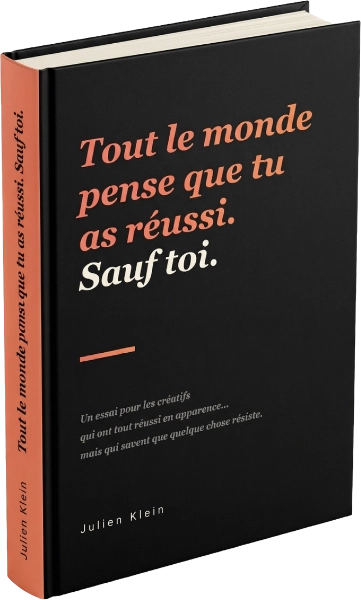
Le Piège du Talent
« Si j’ai pu faire ça, tu peux faire ce que ce livre te propose. Ce livre est né d’une conversation que j’ai eu juste avant la mort de quelqu’un. Il est écrit pour que tu puisses avoir ta renaissance. »
Julien Klein, Montréal, Mars 2026
ExpansionStudio
Vous aussi, vous avez une culture qui mérite d'être vue.
Un tournage. Une chaîne de 25K abonnés. Une agence de promotion. Les bons talents viennent à vous.
Déployez votre podcast